Product Overview
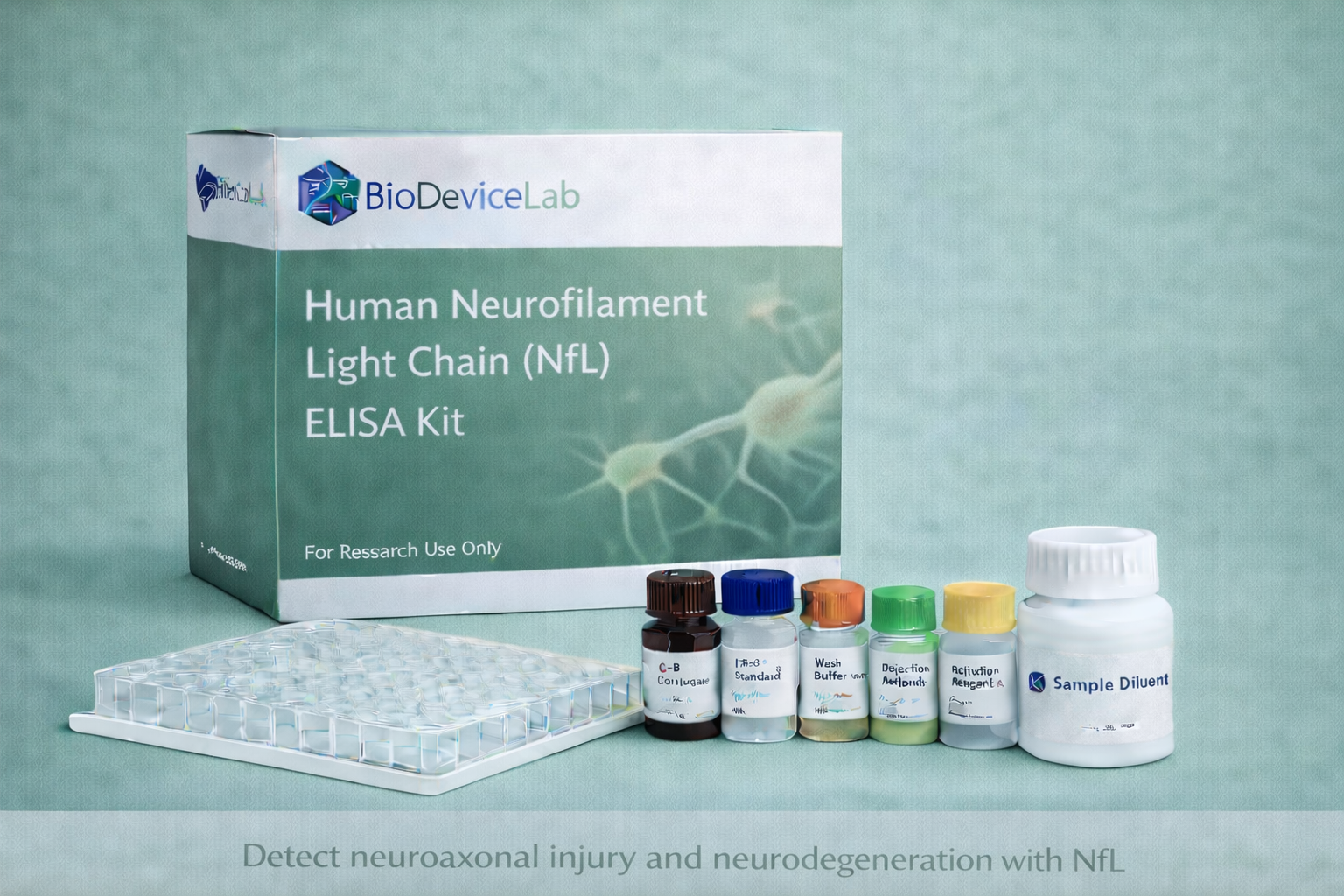
The BioDeviceLab Human Neurofilament Light Chain (NfL) ELISA Kit is a high-performance enzyme-linked immunosorbent assay developed for the quantitative determination of NfL, a structural cytoskeletal protein abundantly expressed in large-caliber myelinated axons. Upon neuronal damage or axonal degeneration, NfL is released into interstitial fluid, CSF, and blood, making it one of the most sensitive biomarkers of neuroaxonal injury.
In neurological and neuroinflammatory conditions, elevated NfL levels are observed in traumatic brain injury, stroke, neurodegenerative diseases, multiple sclerosis, and systemic inflammation affecting the central nervous system. In the context of gut-on-chip and gut–brain axis models, NfL provides a quantitative readout of neuroinflammatory burden, barrier-mediated neurotoxicity, and microbiome-driven neuronal stress. This assay combines high analytical sensitivity, strong specificity, and reproducible performance, making it suitable for mechanistic studies, translational research, and biodevice validation workflows.
Intended Use
This kit is intended for the quantitative determination of NfL in:
• Serum
• Plasma
• Cerebrospinal fluid (CSF)
• Cell culture supernatants
Applications include neurodegeneration and neuroinflammation research, traumatic brain injury and stroke studies, gut–brain axis modeling, organ-on-chip neurotoxicity assays, drug and biologic screening, and biodevice calibration and benchmarking.
Assay Principle
This assay employs a sandwich ELISA format:
• NfL present in the sample binds to capture antibodies immobilized on a 96-well microplate.
• A biotinylated detection antibody specific to a distinct NfL epitope binds to the captured protein.
• An enzyme conjugate is added, followed by chromogenic substrate (TMB).
• The enzymatic reaction generates a colorimetric signal measured at 450 nm.
• Absorbance is directly proportional to the NfL concentration in the sample.
Calibration Curve
• Generated using recombinant human NfL standards with known concentrations.
• Mean absorbance values plotted versus concentration on a semi-logarithmic scale.
• Four-parameter logistic (4PL) regression recommended.
• Sample concentrations interpolated from the standard curve.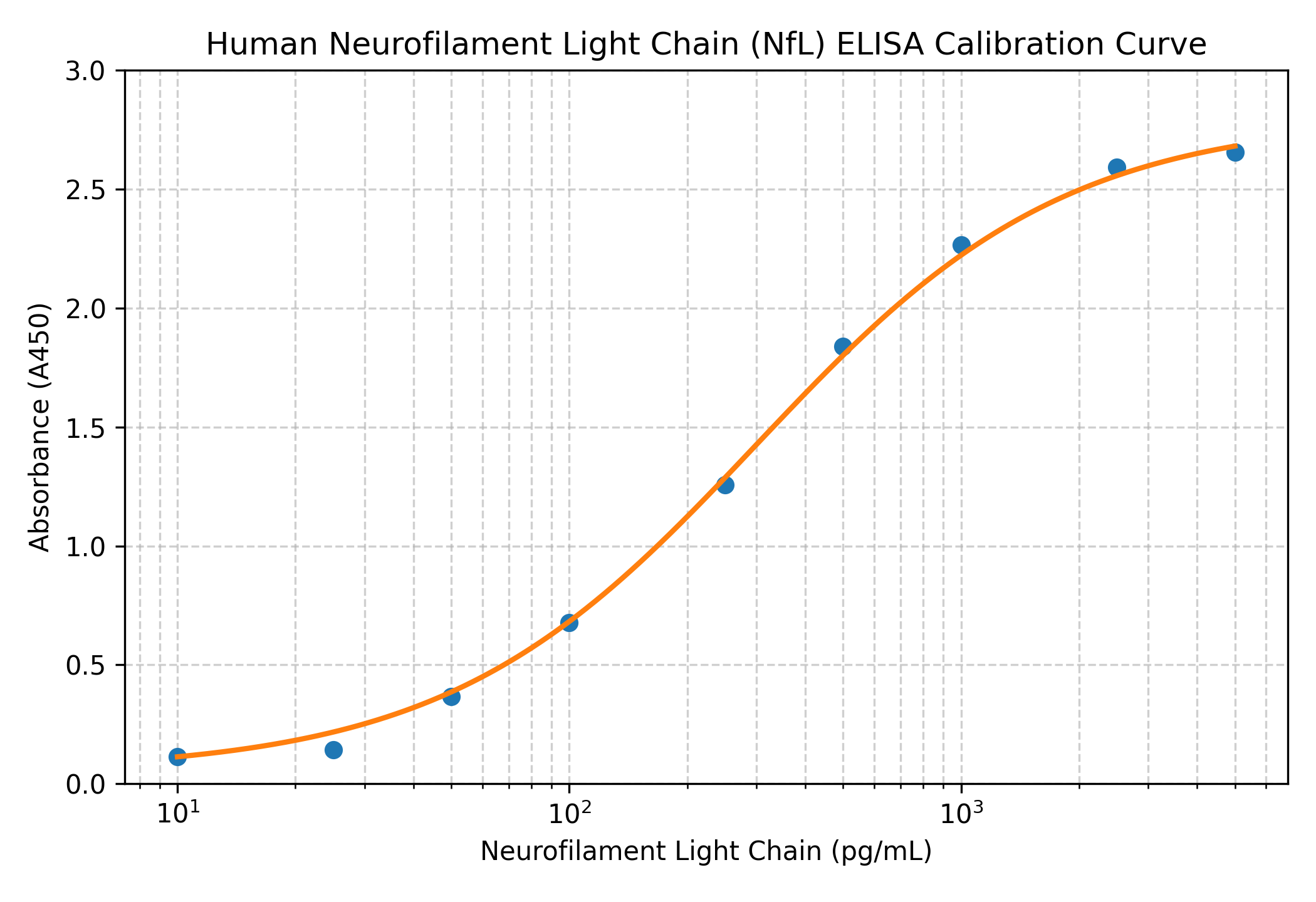
Analytical Performance
Dynamic Detection Range
• 10 – 5,000 pg/mL
Analytical Sensitivity
• Limit of Detection (LOD): ≤ 5 pg/mL
Precision
• Intra-assay CV: < 10%
• Inter-assay CV: < 5%
Selectivity & Specificity
High specificity for human NfL with minimal cross-reactivity to other neurofilament subunits (NfM, NfH), GFAP, Tau, or UCH-L1 (< 1%).
Kit Components
• Antibody-coated 96-well microplate
• NfL standards (lyophilized)
• Biotinylated detection antibody
• Enzyme conjugate
• Assay buffer
• Wash buffer (10×)
• TMB substrate
• Stop solution
• Detailed protocol
Applications
• Neuroaxonal injury and neurodegeneration studies
• Neuroinflammation and CNS damage profiling
• Gut–brain axis and microbiome–neurotoxicity models
• Organ-on-chip neuronal injury assays
• Drug and biologic screening
• Biodevice calibration and benchmarking